- Κωδικός / Course Code: ΔΠΠ699
- ECTS: 0
- Διάρκεια Φοίτησης/ Length of Study: Εξαμηνιαία (εαρινό ή χειμερινό)/ Semi-annual (Fall or Spring)
- Κόστος/ Tuition Fees: 0
- Επίπεδο Σπουδών/ Level: Μεταπτυχιακό/ Postgraduate


 Ανοικτό Πανεπιστήμιο Κύπρου - Open University of Cyprus
Open University of Cyprus
Ανοικτό Πανεπιστήμιο Κύπρου - Open University of Cyprus
Open University of Cyprus


.

.
.
.
-

Η θεματική ενότητα εξετάζει τα κρισιμότερα ζητήματα που αφορούν στην υιοθέτηση και εφαρμογή των περιβαλλοντικών μέτρων της Ευρωπαϊκής Ένωσης. Μεταξύ άλλων διερευνώνται οι στόχοι και αρχές της Ευρωπαϊκής περιβαλλοντικής πολιτικής, αναλύονται τα βασικότερα περιβαλλοντικά νομοθετήματα της Ευρωπαϊκής Ένωσης, καθώς επίσης εξετάζονται κριτικά οι σχετικές αποφάσεις του Δικαστηρίου της Ευρωπαϊκής Ένωσης. Ιδιαίτερη προσοχή δίδεται σε συγκεκριμένους θεματικούς τομείς, όπως η διαχείριση των αποβλήτων (π.χ. ανακύκλωση και πρόληψη των αποβλήτων), η προστασία της φύσης και της βιοποικιλότητας (π.χ. δάση, γενετικά μεταλλαγμένοι οργανισμοί), η προστασία και διαχείριση των υδάτων (π.χ. θαλάσσια ρύπανση, εσωτερικά ύδατα) και το σύστηµα εµπορίας δικαιωµάτων εκποµπής αερίων θερµοκηπίου.
-
Module Purpose and Objectives
Global policies (e.g., EU Green deal) urge for sustainable resources management and GHG emissions mitigation. Water and energy resources, as well as food production systems management should be redesigned. Therefore, the course aims to introduce the students to the fundamental concepts of the nexus approach and present an analysis for food production and distribution, water, and energy management, focusing on arid and semi-arid areas. The course will contribute to decision making towards sustainable spatial planning (and land use related conflicts mitigation) by highlighting the tradeoffs among energy, water, and land use. The course will also introduce an ecosystem services “point of view” to sustainable resources management. Teaching in this module will combine weekly online group consultations with a series of lab exercises using free software (CLIMEX, PEWI, Cool Farm Tool) accompanied by audiovisual educational material (weekly video-lectures and video-recorded practical exercises).
Module Content
-

Module Purpose and Objectives
The aim of the course is to introduce to the concept of Ecosystem Services (ES) and their assessment. The link between biodiversity and ecosystem services and in turn with human well-being as a path towards environmental sustainability will be demonstrated. Students will become familiar with the challenges associated with the identification, assessment, integration and reporting of ecosystem services in different
management areas and sector strategies. The course will include a practical part where the use of specific methods and techniques in valuation and mapping of ES will be demonstrated by using targeted case studies. Teaching in this module will combine weekly online group consultation online with a series of lab exercises using free software (PEWI, InVEST, Trade Off, EnviroAtlas) accompanied by audiovisual educational material (weekly video-lectures and video-recorded practical exercises).
Module Content
-

Objectives
The Postgraduate Dissertation contributes to the deepening of research in the subject of this Postgraduate program, to the familiarizations of students with the process of research and research methods and to provision of further specialized knowledge in the field of study which a student chooses for his/her dissertation.
The choice of topic and supervisor is equal in each of the offered courses of the Program or broader in the fields of knowledge which the program deals with. Students submit a dissertation proposal which must be accepted by a member of the teaching staff of the Program who agrees to serve as their supervisor. Alternatively, students may choose from a range of topics proposed by the academic staff of the Program. Theses are evaluated by a three-member academic committee. The three-member committee is approved by the School concerned (in this case the School of Pure and Applied Sciences) and consists of the dissertation supervisor and two members. All three members, an in particular the supervisor, should have research and scientific experience related to the proposed topic.
The dissertation is carried out in two parts (two courses i.e. DPP701Α and DPP701Β) over two semesters, the 3rd and 4th corresponding to 10 + 20 ECTS, respectively. The final document (completed dissertation) is subject to a public defense and formal exam. In order to be able to register for the dissertation, a student should complete successfully the courses DPP511 Sustainable Development and DPP512 Research Methods. When DPP701Α is completed, the first part of the Dissertation, the student can proceed with the second part, DPP701B. During the second part he/she completes the research and writing up of the dissertation.
The supervisor and both members of the committee evaluate whether the research has been completed in accordance with the required scientific criteria. Then the three-member panel checks whether the dissertation has also followed OUC's regulation and "Guidelines for Graduate Theses". On assessing the aforementioned, the three-member committee decides whether the student is ready defend his / her dissertation and thus complete his / her study programme.
The Program organizes public presentations (defenses) of theses at the end of each academic semester. During each Master's thesis presentation, the student presents his research and findings and receives questions from his three-member examination committee. Upon completion of the questions the student leaves and the three-member committee meet to evaluate the student's performance. By successful defending his/her Master's thesis the student completes his/her academic obligations and can be awarded his/her degree.
Learning Outcomes
-

Objectives
The Postgraduate Dissertation contributes to the deepening of research in the subject of this Postgraduate program, to the familiarizations of students with the process of research and research methods and to provision of further specialized knowledge in the field of study which a student chooses for his/her dissertation.
The choice of topic and supervisor is equal in each of the offered courses of the Program or broader in the fields of knowledge which the program deals with. Students submit a dissertation proposal which must be accepted by a member of the teaching staff of the Program who agrees to serve as their supervisor. Alternatively, students may choose from a range of topics proposed by the academic staff of the Program. Theses are evaluated by a three-member academic committee. The three-member committee is approved by the School concerned (in this case the School of Pure and Applied Sciences) and consists of the dissertation supervisor and two members. All three members, an in particular the supervisor, should have research and scientific experience related to the proposed topic.
The dissertation is carried out in two parts (two courses i.e. DPP701Α and DPP701Β) over two semesters, the 3rd and 4th corresponding to 10 + 20 ECTS, respectively. The final document (completed dissertation) is subject to a public defense and formal exam. In order to be able to register for the dissertation, a student should complete successfully the course DPP511 Sustainable Development. When DPP701Α is completed, the first part of the Dissertation, the student can proceed with the second part, DPP701B. During the second part he/she completes the research and writing up of the dissertation.
The supervisor and both members of the committee evaluate whether the research has been completed in accordance with the required scientific criteria. Then the three-member panel checks whether the dissertation has also followed OUC's regulation and "Guidelines for Graduate Theses". On assessing the aforementioned, the three-member committee decides whether the student is ready defend his / her dissertation and thus complete his / her study programme.
The Program organizes public presentations (defenses) of theses at the end of each academic semester. During each Master's thesis presentation, the student presents his research and findings and receives questions from his three-member examination committee. Upon completion of the questions the student leaves and the three-member committee meet to evaluate the student's performance. By successful defending his/her Master's thesis the student completes his/her academic obligations and can be awarded his/her degree.
Learning Outcomes
-
Module Purpose and Objectives
Terrestrial Ecosystem Management requires a thorough knowledge of ecosystem components’ interactions and their relationship with humans. Integrated ecosystem management focuses on ecosystem conservation with the aim to account for both ecological and human needs. An integrated framework which recognises the multiple uses, functions and services which ecosystem deliver. The module provides students a knowledge base and practical experience on biodiversity and terrestrial ecosystem management aspects. The objectives of the course are to:
By successfully completing this module the student should be able to :
Module Content
1. Principles of Ecosystem Management: Ecosystem Management Concepts, Ecosystem Approach, Ecological Integrity, Adaptive Management
2. Ecosystems and Ecosystem Services: Ecosystem Approach, Ecosystem Functions, Production Services, Regulatory, Cultural and Support Services, Goods, Indicators
3. Mediterranean Ecosystem Matorral, Maquis, Garrigue, Fynbos, Mallee, Chaparral, Phrygana, endemism, fire, grazing, adaptation, sclerophylly
4. Mountain Ecosystems: orogenesis, tectonics, volcanic phenomena, hydrology, soils, trees, forests, ecotones,
5. Climate Change & Ecosystems: Eastern Mediterranean Warming, Eastern Mediterranean Drying, Extreme Phenomena, Climate Models, Phenological Changes, Species Distribution, Mortality
6. Wildlife management: habitat, wildlife, hunting, r - strategy, k - strategy, habitat enhancement and improvement, game reserves, endangered species protection
7. Habitat Management: vegetation properties, ecological succession, disturbance, management plans
8. Management of Protected Areas: Biosphere Reserves, National Parks, Natural Reserves, Nature Monument, Protected Landscape, management evaluation framework and process, management conflicts in protected areas
9. Restoration Ecology: restoration, enhancement, recovery, rehabilitation, ecological processes, restoration success, values / tresholds, invasive species
10. Infrastructure and Ecosystems: impact of infrastructures on species and habitats, wildlife mortality, surveillance, compensatory measures, spatial planning
11. Land Use Dynamics: Natural Environment, Physical Processes, Human Activities, Spatial Changes - Spatial Differences, Interaction of Environmental Factors and Land Use
12. Land Degradation & Desertification: Causes of Desertification, Biophysical / Socioeconomic Factors, Slow 'and' Rapid 'Variables, Dahlem Desertification Model, Desertification and Critical Thresholds, Desertification Syndromes
13. Landscape Character Assessment: Landscape Character Assessment (LCA), European Landscape Convention, Physiography, Cultural Dimension, Landscape Typology, Landscape Sensitivity
Hands on laboratory exercises will take place with the use of freeware such as QGIS (land use change), ILWIS (burnt areas mapping) CLUE landscanner (land use modelling) People in Ecosystems/Watershed Integration (PEWI) (modelling ecosystem services). In addition, with the help of Virtual Labs students will be able to take part in sampling and mapping activities in a simulated landscape.
-
Module Purpose and Objectives
ΔΠΠ 621 is a specialization module. The aim of the student is to provid student with skills that will help him / her professionally in the field of Renewable Energy Sources. Energy production around the world is a complex and diverse issue that requires careful and careful management. It covers many aspects and combines paramount economic, environmental and social considerations.
Green forms of energy (or renewable energy sources, or new sources of energy, or green energy) are forms of energy utilized by various natural processes, such as wind, geothermal energy, water circulation and more. The term "green" refers to two basic characteristics. Firstly, no active intervention is needed to exploit them (e.g. mining, pumping or burning) compared to the hitherto used energy sources, but simply exploiting the existing energy flow in nature. Second, they are "clean" forms of energy, very "environmentally friendly", that do not release hydrocarbons, carbon dioxide or toxic and radioactive waste, like other large-scale sources of energy. So renewable energy is considered by many to be the starting point for solving the ecological problems facing the planet. 'Renewables' are generally considered alternatives to traditional sources of energy (e.g. oil or coal), such as solar and wind. Their use is either direct (mainly for heating) or after conversion to other forms of energy (mainly electricity or mechanical energy). It is estimated that the technically exploitable energy potential of the green forms of energy is a multiple of the global total energy consumption. But the recent high cost of new energy applications, technical implementation problems, and political and economic considerations related to maintaining the status quo in the energy sector have prevented widespread adoption.
The module aims to familiarise students with the
Module Content
The module first presents a historical overview on the use and transfer of energy, the forms of energy as well as renewable energy. Reference is made to the legal requirements of RES, as well as to the current situation of both Cyprus and Greece regarding RES issues and the objectives to be achieved under European Directives. The EU priorities in energy policy and energy market are discussed. The course reports and delves into traditional and emerging new energy suppliers and tackles geostrategic issues. It analyzes the importance of the EU's 2020, 2030 and 2050 targets. In addition, it focuses on solar energy as a source of electricity, as well as the current situation in Cyprus and Greece, and the objectives that EU Member States must meet. It presents the education of students in a Power Generation Lab. It includes experiential training with visits to Photovoltaic Parks and an explanation of the theory in practice. Equipment used to control the panels will be presented.
The purpose of this module is to help students understand the state of their photovoltaic controls. It emphasizes wind energy as a source of electricity production as well as the current situation in Cyprus and Greece, and the objectives to be achieved by EU Member States. It deals with Biomass, where reference is made to the concept of biomass, the sources of biomass and its applications, as well as the disadvantages, while at the end the situation in Cyprus and Greece on biomass issues is presented. Emphasis is placed on energy crops, organic waste. At the same time thermochemical and biochemical processes are analyzed. Moreover, it presents the technologies used for energy recovery. The technologies of gasification, combustion, pyrolysis as well as the energy analysis of each method will be presented. The advantages and disadvantages of each method will be analyzed and presented.
It includes experiential training with visits to a biogas plant and an explanation of the theory in practice. It presents the basics related to bioclimatic design and indoor air quality. This is done with the view to make students understand the importance of reducing the energy consumption of buildings, the way this can be achieved, the basic laws of Cyprus and Greece, the concept of zero-consumption building as well as the basic requirements of bioclimatic planning. Bioclimatic planning in addition to energy consumption in a room is also related to the concept of indoor air quality as well as the factors that influence and the effects caused by indoor air pollution.
The module also includes key elements related to the energy performance of buildings. The purpose is to understand the importance of reducing the energy consumption of buildings, the way this can be achieved, the basic laws of Cyprus and Greece, the concept of zero-consumption building. Processes and methodologies for building energy efficiency will also be developed.
The following thematic topics are covered:
-
Module Purpose and Objectives
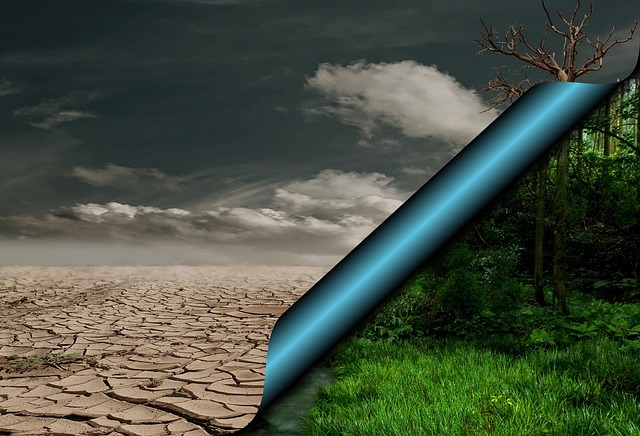
The module's main objective is to address the phenomenon of climate change from multiple perspectives and approach the impacts it is expected to have in the Natural and the Anthropogenic Environment of the Mediterranean, with special focus on Greece and Cyprus. Furthermore, the Thematic Unit examines the adaptation measures that need to be taken to tackle climate change impacts on aquatic systems, on the coastal and marine environment, on terrestrial and forest ecosystems, on agricultural systems, as well as in the fields of human health protection, in energy, transport and infrastructure and in the Mediterranean urban environment. Additionally, the Thematic Unit examines the cost and benefits of climate change adaptation, as well as measures that could lead to climate change mitigation, by presenting the advantages and disadvantages of available solutions.
Students successfully completing this Thematic Unit are expected to be able to:
Module Content
The module examines key terms and concepts that relate to global climate change, the factors that determine it, as well as the characteristics of Mediterranean climate, placing special emphasis on the Eastern Mediterranean. Moreover, it analyses the anthropogenic factors that cause recent global climatic change, the magnitude of climatic changes on a global scale, but also in Europe, in the Mediterranean, in Greece, and in Cyprus. In addition to these, the Thematic Unit examines global and regional climate model projections for the 21st century.
Moreover, the module, examines the already evident, as well as expected impacts of climate change on aquatic systems, on the coastal and marine environment, on terrestrial and forest ecosystems as the principal components of the Natural Environment in the Mediterranean. In addition, it addresses climate change impacts on agricultural systems, on human health protection, on energy, on transports and infrastructure networks and on the urban sector as the principal components of the Anthropogenic Environment in the Mediterranean.
The module emphasizes on adaptation measures needed to be taken to face the expected climate change impacts.
Moreover, it seeks to investigate the cost and benefits of climate change adaptation, as well as measures for climate change mitigation, by presenting the advantages and disadvantages of available solutions.
In addition to using the available theoretical framework and case studies, it includes laboratory exercises with original data for assessing regional climatic change or regional environmental risks per sector, helping students to assimilate new knowledge e.g. for assessing regional changes in climate or bioclimate or for assessing the risks addressed by particular environmental sectors.